For global buyers, choosing the top Led Letters is not simply a race for brightness or low pricing. A reliable sign should remain readable across shopfronts, hotels, exhibitions, and transport environments. It must also fit local electrical standards, climate conditions, and installation practices. Looks can mislead. A glowing sample may hide weak wiring, uneven illumination, or fragile acrylic edges.
This guide examines Led Letters through practical buying criteria. We consider stainless steel, aluminum, acrylic, and coated finishes, because each material performs differently outdoors. We also review LED color consistency, power consumption, waterproofing, mounting methods, and warranty support. An experienced supplier should provide clear drawings, wiring details, test photographs, and realistic production timelines. Certifications and inspection records matter too, especially when signs cross borders. Packaging deserves attention. A damaged corner can erase the savings from a cheaper quotation.
There is no universal winner. A compact retail logo may need slim halo-lit letters, while a coastal hotel could require sealed, corrosion-resistant construction. Buyers should compare total ownership costs, not only the factory price. That includes energy use, shipping volume, maintenance access, and replacement parts. Some recommendations remain imperfect because suppliers describe quality differently. Samples should be checked under daylight and nighttime conditions. Details matter. Careful questions often reveal more than polished product pages. This article helps international purchasers make a balanced decision, while recognizing that local codes, site measurements, and installation expertise can change the final choice.
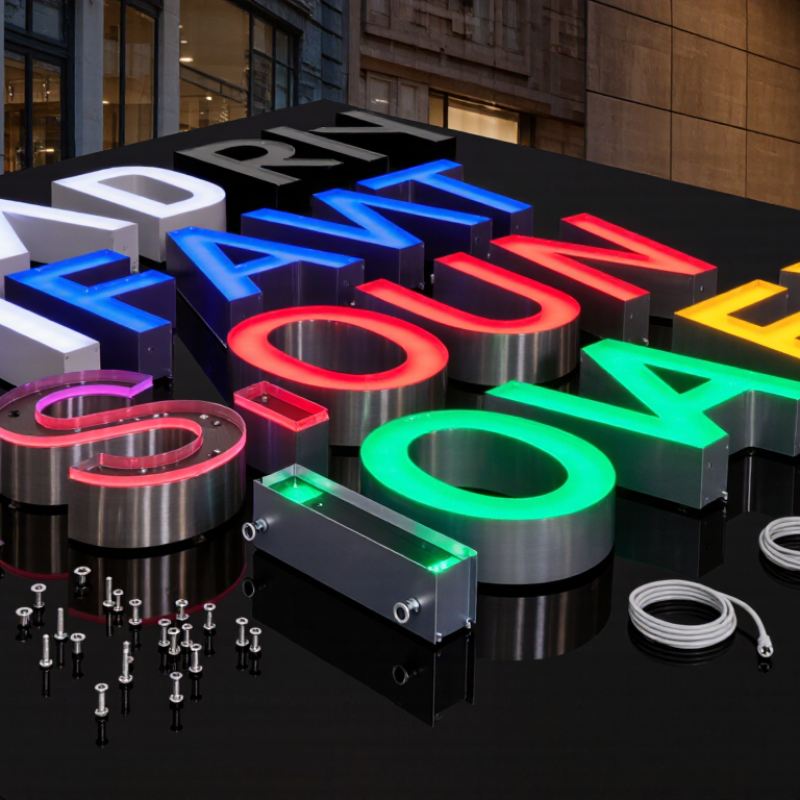
What Are LED Letters and Why Do Global Buyers Choose Them?
LED letters are three-dimensional signs shaped into individual characters and illuminated with light-emitting diodes. They can use acrylic faces, aluminum returns, stainless steel edges, or painted metal bodies. Inside, LED modules spread light across each letter. At night, the sign may resemble a clean row of glowing blocks above a hotel entrance, retail facade, or exhibition booth.
Global buyers choose LED letters for visibility, flexible design, and lower operating energy than many older lighting systems. They can request front-lit, halo-lit, or mixed illumination. Color temperature also matters. Warm white feels welcoming, while cool white appears sharper. Reliable buyers check voltage, IP protection, brightness, mounting methods, and replacement access before ordering. Photos alone are not enough. Material samples and installation drawings prevent expensive surprises. Yet brightness is not everything. Excessive light can weaken visual comfort and reduce design quality.
Tips: Confirm the exact letter height, stroke width, lighting style, and viewing distance. Ask for a wiring diagram and tested samples. Check whether the power supply matches the destination country. Consider rain, dust, wind, and cleaning routines. A cheaper quote may hide thinner materials or difficult maintenance. I have found that simple lettering often performs better than crowded designs, although this is not universal. Allow space around each character; cramped letters lose clarity quickly.
What Are the Top LED Letters for Global Buyers?
Typical power demand by LED letter style, shown as an approximate midpoint in watts per square meter.
Front-lit channel letters are widely selected when strong daytime visibility is required, while halo-lit and edge-lit letters generally use less power because their LEDs illuminate the surrounding surface rather than the entire face. Actual consumption depends on letter depth, face material, LED density, brightness settings, color, and installation conditions. Global buyers commonly compare energy efficiency, weather resistance, readability, customization, and maintenance requirements before choosing a design.
Which LED Letter Types Suit Different Branding and Display Needs?
Global buyers need LED letters that match viewing distance, brand character, and installation conditions. Face-lit channel letters suit retail façades where strong daytime visibility matters. Their acrylic faces spread light evenly across bold shapes. Halo-lit reverse letters create a softer effect on textured walls. They work well for hotels, offices, and premium interiors, especially after sunset.
Exposed LED neon-flex letters offer a continuous line and a playful appearance. They suit cafés, entertainment spaces, and short branding messages. Three-dimensional acrylic letters provide depth without requiring excessive brightness. This matters in reception areas, where glare can make polished surfaces uncomfortable. Grand View Research estimated the global LED display market at about USD 8.76 billion in 2024, with continued growth through 2030. That wider market trend supports investment in efficient, programmable, and visually controlled signage.
Energy use still deserves attention. The U.S. Department of Energy reports that LEDs generally use at least 75% less energy than incandescent lighting. However, lower consumption does not excuse poor specifications. Ask for measured luminance, color consistency, drainage details, and suitable ingress protection. I have seen attractive letters fail because water collected behind shallow returns. That mistake is easy to overlook. Buyers should also confirm local electrical approvals, mounting loads, warranty limits, and service access before production. A perfect mock-up can hide a difficult installation.
How Do Materials, Illumination, and Construction Affect Quality?
What Are the Top LED Letters for Global Buyers?
How Do Materials, Illumination, and Construction Affect Quality?
Top LED letters are not chosen by brightness alone. Material selection controls durability, weight, appearance, and maintenance. Acrylic faces create clean, even light for indoor signs and sheltered exteriors. Aluminum returns resist corrosion and keep large letters relatively light. Stainless steel offers a premium finish, but fingerprints and surface marks can become visible. In coastal environments, buyers should request corrosion-resistant specifications and inspect the metal thickness.
Illumination quality depends on LED placement, color consistency, and heat control. Evenly spaced modules reduce dark spots around narrow strokes and corners. A diffuser can soften harsh points, but an overly thick diffuser may weaken the sign’s visual impact. Warm white light often suits hospitality settings, while cooler white light improves clarity in commercial areas. Always request operating samples. A photograph cannot reveal flicker, uneven brightness, or color shifts.
Construction details often decide whether letters remain reliable after installation. Check sealed joints, drainage paths, cable protection, and mounting hardware. Outdoor products need tested resistance to water and dust, supported by clear documentation. Experienced buyers also examine wiring access and replacement procedures before approving production. I have seen attractive samples fail because their rear panels trapped moisture. That mistake is easy to overlook. A detailed inspection checklist helps, though no checklist catches everything. Suppliers should provide drawings, material data, test records, and realistic lead times. Clear evidence is more dependable than confident promises.
What Standards Should Buyers Check for Safety and International Shipping?
Global buyers should judge LED letters by documented safety, not brightness alone. Ask for test reports covering the complete sign, including the power supply, wiring, connectors, and mounting frame. IEC-based testing can support electrical safety, while EMC evidence helps reduce interference with nearby equipment. Requirements may vary by destination.
Check the operating voltage and frequency before ordering. A sign designed for 110 volts may fail on a 220-volt circuit without the correct power supply. Look for proper grounding, fuse protection, cable insulation, and an accessible disconnect switch. Outdoor letters also need a suitable IP rating, sealed cable entries, and materials that resist rain and ultraviolet exposure. IP ratings are not permanent; poor installation can weaken them.
Shipping documents deserve equal attention. Request a packing list, commercial invoice, product dimensions, gross weight, and clear customs descriptions. Crated signs should have corner protection, moisture barriers, and internal bracing around fragile acrylic faces. Wooden packaging may require compliant treatment and marking under destination rules. Confirm whether the quoted freight includes duties, local delivery, and inspection fees. Small details matter.
A pre-shipment inspection can verify letter color, wiring labels, test certificates, and carton condition. Photos are useful, but they can miss loose terminals or hidden cracks. I would not rely on them alone. Standards change, and one certificate may not satisfy every market, so buyers should confirm local requirements with an independent compliance professional.
How Can Global Buyers Compare Suppliers, Costs, and Customization Options?
Global buyers should compare LED-letter suppliers by delivered performance, not catalog price. Grand View Research valued the global digital signage market at about USD 27 billion in 2023, showing strong demand for dependable visual communication. Yet LED letters are not identical products. Ask for lumen output, wattage per letter, color consistency, ingress protection, operating temperature, and warranty terms. Request a powered sample with the same materials and dimensions as the final order. Small samples can hide uneven illumination.
Cost comparison requires a landed-cost worksheet. Include tooling, artwork preparation, packaging, freight, customs charges, installation hardware, replacement modules, and local taxes. A quote marked “EXW” excludes major expenses. The U.S. Department of Energy reports that LED lighting can use at least 75% less energy and last up to 25 times longer than incandescent lighting. That supports lifecycle costing, although sign performance depends on drivers, ventilation, and daily operating hours. The cheapest offer may age badly.
Customization should be tested through drawings, not promises. Compare acrylic thickness, aluminum grade, return depth, mounting methods, dimming control, voltage, plug standards, and color-temperature tolerance. Suppliers should provide production drawings, inspection photos, electrical test records, and clear defect remedies. ISO 9001 certification can indicate a quality system, but it does not guarantee every batch. That matters. I would also score communication speed and revision accuracy, because one missed decimal point can change a letter’s scale. My own comparison would leave room for doubt: supplier ratings often rely on documents, while long-term outdoor performance remains difficult to predict before installation.
FAQS
LED letters are three-dimensional characters with built-in light-emitting diodes. They may use acrylic faces, aluminum sides, or painted metal bodies. At night, they can form a bright row above an entrance.
Buyers choose them for visibility, flexible shapes, and lower energy use. They can suit hotels, shops, offices, and exhibition booths. Simple lettering often remains easier to read.
Common styles include front lighting, halo lighting, and mixed illumination. Warm white creates a welcoming feeling. Cool white looks sharper. Brightness alone is not enough.
Confirm letter height, stroke width, viewing distance, voltage, and IP protection. Also check brightness, color temperature, mounting methods, and replacement access. Measure twice.
Compare delivered performance, not only the catalog price. Request lumen output, wattage, color consistency, operating temperature, and warranty terms. Ask for a powered sample using final materials and dimensions. Small samples can mislead.
Include tooling, artwork, packaging, freight, customs charges, installation hardware, and local taxes. Add replacement modules and local electrical work. An EXW quote may exclude major expenses. The cheapest offer may age badly.
Review production drawings before approving customization. Check acrylic thickness, aluminum grade, return depth, dimming control, and plug standards. Confirm mounting details and color-temperature tolerance. One missed decimal point can change the scale.
Consider rain, dust, wind, cleaning routines, and operating temperatures. Check ventilation and access for future repairs. Match the power supply to the destination country. Outdoor performance remains difficult to predict perfectly.
Conclusion
Led Letters are versatile illuminated signs that help businesses create clear, memorable, and highly visible branding in retail spaces, offices, events, hotels, and outdoor environments. Global buyers can choose from front-lit, back-lit, edge-lit, halo-lit, and non-illuminated styles depending on their display goals, viewing distance, and installation location. Each option offers a different visual effect, from bold daytime visibility to refined nighttime glow.
Product quality depends on materials such as aluminum, acrylic, stainless steel, and durable coatings, as well as the reliability of the LEDs, wiring, power supply, and construction methods. Buyers should review electrical safety certifications, ingress protection ratings, voltage compatibility, packaging, and shipping requirements before placing an international order. Comparing suppliers should include more than price: evaluate design support, customization accuracy, production timelines, sample approval, warranty coverage, communication, and after-sales service. A careful comparison helps buyers secure attractive, durable, compliant, and cost-effective signage for different markets.

 Xinliangdian