Choosing the top Large Led Letters from China requires more than comparing photographs or factory prices. A convincing sign must look sharp at noon, remain readable at night, and survive repeated handling. This guide examines manufacturers through practical evidence, including material quality, LED consistency, fabrication accuracy, and after-sales support. It also considers whether suppliers can provide drawings, samples, wiring details, and realistic production schedules.
Strong suppliers usually offer aluminum frames, acrylic faces, stainless-steel trim, and energy-efficient LED modules. These details matter. A poorly sealed letter may collect moisture behind its face. Uneven illumination can make a premium logo appear unfinished. Buyers should check IP ratings, power consumption, color temperature, mounting methods, and replacement access before approving production. Factory videos help, but independent samples are more reliable than polished marketing images.
No ranking is permanent. Market conditions change. Shipping costs, component availability, and quality-control practices can shift quickly. Some suppliers may excel at oversized outdoor letters, while others perform better with lightweight indoor displays or complex brand shapes. That difference is easy to overlook. This overview therefore presents practical selection guidance rather than an absolute winner. It encourages buyers to request measurable specifications, inspect production samples, and confirm warranty terms in writing. Real experience often exposes small weaknesses, such as fragile connectors or unclear installation drawings. Those issues deserve attention before a large order leaves China.
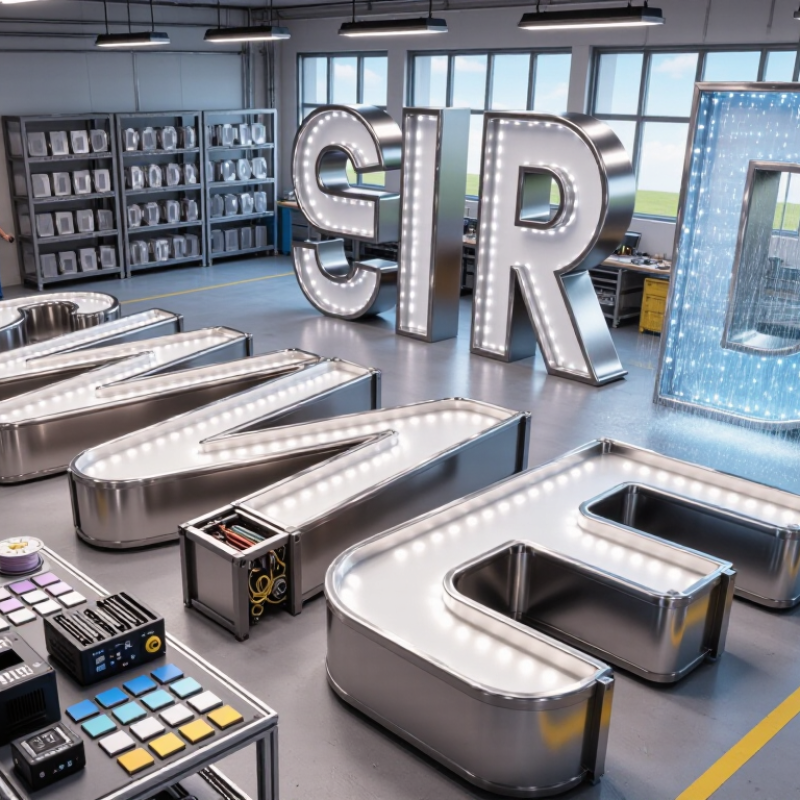
Large LED letters from China are commonly built as front-lit, halo-lit, or dual-lit channel letters. Pixel-based versions create moving effects, while static modules suit retail façades and event stages.
Standard heights often range from 300 to 1,500 millimeters, with larger custom letters exceeding two meters. Size changes more than appearance; it affects module spacing, power demand, shipping, and installation strength.
Brightness between 6,500 and 10,000 cd/m² suits direct sunlight and long viewing distances. However, maximum output is not always better. Excessive brightness can cause glare, uneven color, and higher heat loads.
Professional LED display guidance typically treats 5,000–10,000 nits as an outdoor range, depending on sunlight and viewing angle. The U.S. Department of Energy’s 2023 Solid-State Lighting R&D report also identifies efficiency above 200 lumens per watt as an important development benchmark. That figure does not guarantee efficient signage, because optical loss and power supplies matter.
Ask for brightness measured after calibration, not only the LED chip rating. A reliable supplier should provide module spacing, measured power consumption, waterproofing details, and dimming curves.
A 10,000 cd/m² letter may need automatic brightness control during cloudy weather or nighttime operation. This is where specifications can mislead.
I would also check luminance uniformity across corners; a bright center with dark edges looks unfinished.
There is no universal best size or brightness, only a defensible match between distance, daylight, and the installation surface.
Large LED letters from China are often selected for retail façades, event halls, and public buildings. The most important specifications are practical, not decorative. A 12–24 VDC system supports safer low-voltage installation and works well with properly rated power supplies. Confirm the actual operating voltage before wiring. Small mismatches can damage modules or create unstable brightness.
IP65 protection IP65 protection is another key requirement for outdoor letters. It means the enclosure resists dust and low-pressure water jets from different directions. It does not mean the letters can remain underwater. Inspect sealed edges, cable glands, drainage points, and rear covers before installation. A small gap can become a serious problem after repeated rain and temperature changes. That detail matters.
LED life ratings LED life ratings commonly range from 50,000 to 100,000 hours. These figures usually describe gradual brightness reduction under controlled conditions, not guaranteed failure-free operation. Heat, excessive current, poor ventilation, and constant full brightness can shorten service life.
Ask for testing records, LED bin information, power-supply data, and a clear brightness-maintenance standard. I would also request a sample letter before ordering a full set. Photos can hide uneven illumination. Even experienced buyers sometimes overlook shadowing near corners. A night test from several viewing distances gives more reliable evidence than a bright showroom demonstration.
Large LED letters from China are judged by more than size. Their real value comes from SMD, COB, and 3D channel-letter engineering. SMD modules offer balanced brightness and easier maintenance across broad faces. They work well for retail signs, hotels, and outdoor building names. COB technology creates tighter light points and smoother illumination. It can reduce visible hotspots on shallow letter faces. However, poor thermal design may shorten service life. I have seen impressive samples fail after heat testing.
Tips: Request a physical sample before approving mass production. Check acrylic thickness, aluminum seams, wiring, and module spacing. Ask for brightness measurements at several points, not only one center reading. Confirm outdoor protection with documented testing. A supplier should explain its process clearly.
3D channel letters provide stronger depth and a more architectural appearance. Stainless steel, aluminum, and acrylic can create different visual effects. Deep returns usually improve presence, but they also increase weight and installation demands. COB strips may suit narrow strokes, while SMD modules often simplify replacement. Inspect the rear structure carefully, especially lifting points and cable access. Reliable manufacturers provide drawings, sample photos, test records, and packaging details. Still, specifications can look better than real workmanship. Independent inspection remains worthwhile before shipment.
Large LED letters from China should be ranked by evidence, not appearance. A strong supplier provides 80+ CRI modules, stable color bins, and a documented 3–5-year warranty. The U.S. Department of Energy reports that quality LEDs can use at least 75% less energy than incandescent lighting. However, efficiency claims need testing conditions. Ask for LM-80 data, thermal test results, and product-level photometric reports.
For supplier ranking, Tier 1 should include CE documentation or valid UL certification, verified factory testing, and clear warranty coverage. Tier 2 may offer good brightness and pricing but lack complete aging data. Tier 3 suppliers often provide attractive samples without consistent batch control. Large letters deserve extra inspection. Check aluminum thickness, IP rating, drainage holes, wiring quality, and acrylic edges. The International Energy Agency continues to identify LED conversion as a major efficiency opportunity, yet poor heat management can shorten service life. This is where many quotations become less convincing.
Tips: Request a random production sample, not only a polished showroom unit. Confirm whether the 3–5-year warranty covers modules, power supplies, labor, and shipping. CE marking shows conformity with applicable European requirements; it is not the same as independent certification. For UL projects, verify the certificate applies to the exact construction. I would also measure brightness after several hours. Early results can look excellent. Long-term consistency is harder.
Large LED letters from China are increasingly used on retail entrances, event stages, hotels, and building façades. For 1–3 m letters, common constructions include aluminum frames, acrylic faces, stainless-steel returns, and front or halo illumination. A 1 m indoor letter may cost about US$250–700 ex works, while a weather-resistant 3 m letter can reach US$900–2,500. Freight, crating, transformers, engineering, and installation can add 25–60%. These are practical quotation ranges, not fixed market prices.
Energy use depends on letter depth, lighting density, and operating hours. The U.S. Department of Energy’s 2023 Solid-State Lighting R&D report records LED package efficacy above 200 lumens per watt in laboratory conditions. Finished signage performs lower. Design still matters. A shallow letter may appear bright but create uneven hotspots. Large façade letters also require wind-load checks, drainage, safe access, and certified electrical components. A missed detail can become an expensive correction.
Tips: Request a scaled drawing, lighting sample, IP rating, power chart, packing method, and warranty terms before payment. Ask for nighttime photos, not only studio images. Confirm whether the quote includes mounting hardware and spare modules. Cost comparisons can be misleading. One supplier may price the letter only, while another includes testing and export packing. Allow time for revisions; oversized letters often look impressive in a warehouse but feel visually heavy on a real façade. Geological wind conditions and local sign rules also deserve professional review.
| LED Letter Type | Typical Height | Main Applications | Construction & Finish | Typical Lighting | Indicative China Cost* | Estimated Weight | Recommended Protection | Typical Lead Time |
|---|---|---|---|---|---|---|---|---|
| Front-Lit 3D Channel Letters | 1.0–3.0 m | Retail entrances, shopping centers, hotel façades, roadside identification | Aluminum or galvanized-steel body with acrylic face; painted or powder-coated finish | White or color LED modules, usually 6500 K or RGB/RGBW | US$180–450 per m² of face area | 25–70 kg per m² | IP65 front; sealed power compartments for exterior use | 15–30 working days |
| Halo-Lit / Reverse-Lit Letters | 1.0–2.5 m | Premium façades, corporate buildings, hotels, luxury retail | Metal face and return with rear LED illumination projecting onto the wall | Warm white, neutral white, or tunable white | US$220–550 per m² of letter face area | 30–85 kg per m² | IP65–IP67 modules and weather-resistant cable glands | 20–35 working days |
| Front-and-Halo-Lit Letters | 1.2–3.0 m | Flagship stores, entertainment venues, airports, high-impact event branding | Double-layer construction combining an illuminated acrylic face with rear halo lighting | White, RGB, or individually controlled pixels/modules | US$300–700 per m² of letter face area | 35–95 kg per m² | IP65 minimum for outdoor faces; drainage and ventilation required | 25–40 working days |
| Exhibition & Event LED Letters | 1.0–2.0 m | Trade shows, product launches, weddings, photo opportunities, temporary installations | Lightweight aluminum or PVC body with modular bases and transport-friendly sections | Dimmable white LED or low-voltage RGB LED | US$120–350 per linear meter of lettering | 15–45 kg per linear meter | IP44 for indoor use; IP65 enclosure for covered outdoor events | 10–25 working days |
| Outdoor Programmable RGB Letters | 1.5–3.0 m | Concerts, nightlife venues, festivals, sports activations, media façades | Reinforced aluminum frame with diffused face and DMX or pixel-control system | RGB or RGBW with static, gradient, chase, and synchronized effects | US$350–900 per m² of illuminated surface | 35–100 kg per m² | IP65–IP67; separate protected controller and power supplies | 25–45 working days |
| Freestanding Giant LED Letters | 1.5–3.0 m | Public spaces, malls, festivals, branded installations, indoor atriums | Self-supporting steel or aluminum frame with ballast, feet, or concealed anchoring | Front-lit white, halo-lit white, or programmable RGB | US$450–1,200 per linear meter of lettering | 50–160 kg per linear meter | IP65 electronics; structural anchoring and wind-load review required | 25–50 working days |
Common types include front-lit, halo-lit, and dual-lit channel letters. Pixel versions can create moving effects. Static modules suit façades and stages.
Standard heights range from 300 to 1,500 millimeters. Custom letters may exceed two meters. Larger sizes need stronger frames, deeper crates, and careful installation.
Brightness between 6,500 and 10,000 cd/m² suits direct sunlight and long viewing distances. Maximum brightness is not always best. Glare can become uncomfortable.
Ask for measured brightness after calibration, not only the LED chip rating. Check corners carefully. A bright center and dark edges look unfinished.
Confirm whether the system uses 12 or 24 VDC. Use properly rated power supplies. Small voltage mismatches may cause unstable brightness or damaged modules.
IP65 resists dust and low-pressure water jets. It does not allow underwater placement. Inspect cable glands, sealed edges, drainage points, and rear covers.
Rated life commonly reaches 50,000 to 100,000 hours. This means gradual brightness reduction under controlled conditions. Heat, current, and constant full brightness shorten service life.
A one-meter indoor letter may cost about US$250–700 ex works. A weather-resistant three-meter letter may reach US$900–2,500. Freight and installation can add 25–60%.
Request a scaled drawing, lighting sample, power chart, packing method, and warranty terms. Ask for night photos from several distances. I would not trust studio images alone.
Check wind loads, drainage, mounting strength, safe access, and local sign requirements. Oversized letters may look impressive indoors but feel visually heavy outdoors. That mistake is easy.
Large Led Letters from China offer a versatile solution for high-impact visual communication in retail stores, exhibitions, events, commercial façades, and architectural displays. Available in various forms, including front-lit, back-lit, edge-lit, and three-dimensional channel letters, they can typically be produced in sizes from 1 to 3 meters or customized for larger installations. Many models provide brightness levels of approximately 6,500–10,000 cd/m², ensuring strong visibility in both indoor and outdoor environments.
Key specifications often include 12–24 VDC operation, IP65 protection against dust and water, and LED lifespans ranging from 50,000 to 100,000 hours. Chinese manufacturers commonly use SMD, COB, and 3D channel-letter technologies to balance brightness, appearance, energy efficiency, and durability. When comparing suppliers, buyers should review CRI 80+ performance, three- to five-year warranties, and CE or UL compliance. Costs depend on dimensions, materials, lighting design, control systems, and installation requirements, making these letters adaptable to different budgets and project goals.

Xinliangdian