How to Buy LED Signs in 2026 for Global Sourcing

Time:2026-10-01 Author:Liam
0%

Buying LED Signs in 2026 requires more than comparing prices on a supplier spreadsheet. Global sourcing now involves pixel pitch, brightness, viewing distance, software compatibility, energy use, packaging, and long-term service. A sign may look impressive in a showroom, yet perform poorly under direct sunlight or heavy rain.

David Hickey, a former International Sign Association president, once said, “A sign is a business investment, not merely a decoration.” That principle remains useful when evaluating overseas manufacturers. Buyers should request clear technical drawings, cabinet dimensions, LED brand details, warranty terms, spare-parts policies, and production photographs. Factory audits, sample testing, and third-party inspections can reveal quality problems before shipment.

Small details matter.

For example, a bright roadside display may need automatic brightness control. A retail sign may require quiet cooling fans and easy front access. Coastal installations need stronger corrosion protection. These needs should appear in the purchase specification, not remain as casual promises in email messages.

A low quotation can be attractive. It can also hide weaker components, unclear installation duties, or expensive replacement modules. I have seen sourcing plans focus heavily on unit cost while underestimating freight, customs handling, software training, and maintenance visits. That is an avoidable weakness, though not every cost can be predicted perfectly.

This guide explains how to compare Led Signs suppliers, verify product claims, manage international delivery, and reduce operational surprises. The goal is not choosing the cheapest screen. It is choosing a dependable communication system that fits the site, audience, climate, and budget.
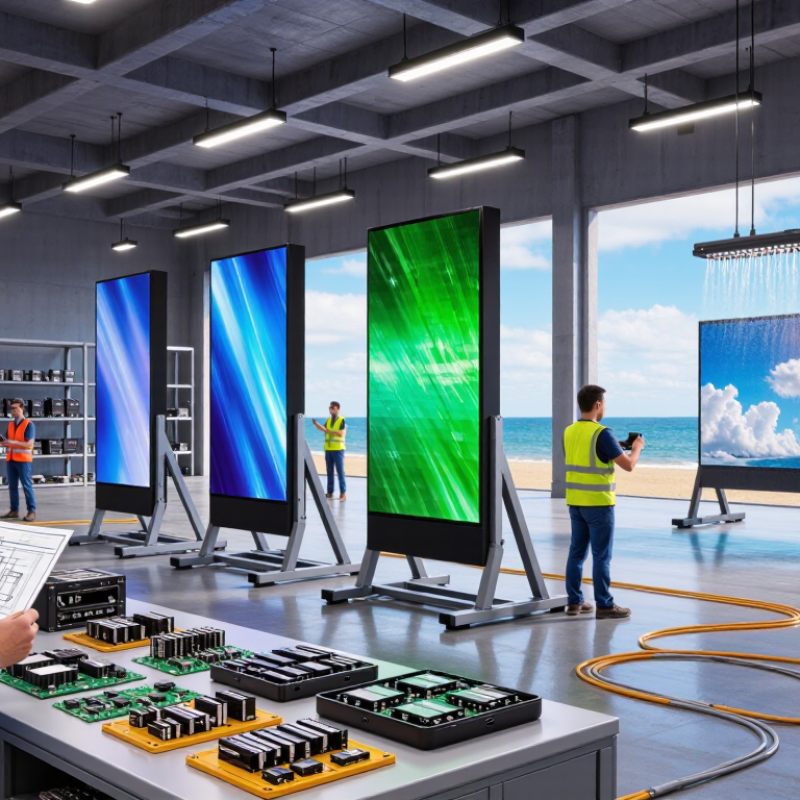
How to Buy LED Signs in 2026 for Global Sourcing

Define Your LED Sign Requirements and Application Goals

Before requesting quotations, define the sign’s job in measurable terms. Is it guiding visitors, displaying prices, supporting advertising, or improving nighttime visibility? Record viewing distance, content type, operating hours, indoor or outdoor exposure, and local climate. These details determine pixel pitch, brightness, cabinet protection, and service access.

Global View Research reported that the digital signage market was valued at over USD 27 billion in 2023. Its forecast also indicates continued growth through 2030. This supports careful planning, not automatic overbuying. A roadside sign may need high brightness and weather resistance. A retail window may need finer pixels and lower power use. Outdoor LED displays often require suitable IP ratings, thermal design, and ventilation. Ask suppliers for measured brightness, power consumption, refresh rate, color consistency, and warranty terms. Do not rely on impressive sample images alone. They can hide weak performance.

Tips: Create a one-page requirement sheet. Include dimensions, pixel pitch, brightness, viewing distance, content schedule, mounting method, voltage, and maintenance access. Request test videos from similar environments. Check performance after rain, dust, and several hours of operation. I once treated brightness as the main priority; that created unnecessary energy use and visual glare. The better question is simpler: what must viewers notice, and from where?

Cite: Grand View Research, Digital Signage Market Report; IEC 60529, Degrees of Protection Provided by Enclosures.

Compare LED Sign Types, Specifications, and Display Technologies

Buying LED signs in 2026 requires more than comparing cabinet prices. Market research supports the demand. Grand View Research estimates the global digital signage market could reach about USD 58.7 billion by 2030, with strong growth from commercial displays. For global sourcing, classify the application first. Indoor fine-pitch SMD modules suit malls and control rooms. Outdoor DIP or high-brightness SMD modules handle sunlight better. COB technology offers a smoother surface and improved impact resistance, but repairs can be less convenient.

Pixel pitch determines viewing distance. A 2.5 mm pitch works well for close indoor viewing, while 6–10 mm often fits roadside screens. Brightness should match the environment, not exceed it blindly. Indoor displays commonly use around 800–1,500 nits; outdoor units may require 5,000–8,000 nits. That extra brightness can increase heat and power use.

Check refresh rate, grayscale depth, color consistency, and viewing angle. IEC 60529 IP ratings also matter for weather exposure, but an IP rating does not guarantee long-term installation quality. It is only one checkpoint.

Energy performance deserves scrutiny. The U.S. Department of Energy has reported that solid-state lighting can deliver substantial energy savings compared with older lighting technologies, yet real savings depend on brightness schedules and control systems.

I once treated brightness as the safest choice. That was incomplete. Ask for measured power consumption, not only maximum wattage.

Request aging tests, spare-module policies, and calibration records. No supplier comparison is perfect. Seasonal temperature, shipping damage, and local service capacity can change the final result.

Evaluate Suppliers, Product Quality, and Global Compliance

Global LED sign sourcing should begin with evidence, not attractive samples. Compare supplier audits, factory capacity, engineering records, and after-sales response. Request current test reports for electrical safety, electromagnetic compatibility, ingress protection, and photometric performance. A certificate alone is not enough. Audit the exact production site. Ask who controls LEDs, drivers, wiring, and firmware. Then verify batch traceability through serial numbers, incoming inspection records, and corrective-action logs.

The International Energy Agency’s Energy Efficiency 2023 report states that lighting uses about 15% of global electricity. Efficiency therefore matters, but advertised performance needs careful checking. The U.S. Department of Energy’s 2023 Solid-State Lighting R&D Opportunities report records laboratory LED efficacy above 200 lumens per watt. Real sign performance is usually lower. Test brightness uniformity, color consistency, power consumption, and thermal behavior on production samples. For outdoor signs, inspect sealing, cable glands, drainage paths, and the declared IP rating under IEC 60529. Small samples can hide weak assembly. Require aging tests.

Global compliance is market-specific. Map each destination’s requirements before purchasing, including IEC 60598-1, IEC 62368-1, EMC rules, chemical restrictions, and local electrical codes. For North American shipments, confirm applicable national requirements rather than assuming one certificate transfers. Use competent, independent laboratories and retain declarations, test reports, and revision histories. Check RoHS and REACH obligations where applicable. Some suppliers provide perfect files but inconsistent products. That gap deserves a second audit.

Calculate Total Costs, Shipping, Installation, and Import Duties

Buying an LED sign in 2026 requires a landed-cost worksheet, not a unit-price comparison. Start with the sign area, pixel pitch, controller, steel frame, packaging, and testing. Add freight, insurance, customs clearance, local delivery, installation, and future maintenance. The UNCTAD Review of Maritime Transport 2024 reports that ships carry over 80% of global merchandise trade by volume. Freight still remains unpredictable. Request both sea and air quotations.

Calculate customs duty from the correct HS code and customs value. Do not assume duty applies only to the factory invoice. Some destinations include freight, insurance, or tooling in the taxable value. The World Trade Organization’s World Tariff Profiles 2024 shows that applied tariff rates differ widely by product and market. Confirm the rate with a licensed customs broker. VAT, inspection fees, port storage, and brokerage may sit outside the quoted duty.

Installation can change the budget sharply. A rooftop sign may require lifting equipment, structural checks, electrical work, and local permits. The World Bank Logistics Performance Index 2023 found that internationally traded goods spend an average of 44 days moving through export and import processes. Delays create storage charges and missed installation dates. For a simple model, use this formula: total cost equals product, freight, duty, tax, clearance, delivery, installation, and contingency. My early estimates were too optimistic. A 10% contingency feels safer, especially when measurements or local labor rates remain uncertain.

Finalize Orders, Quality Checks, Delivery, and After-Sales Support

Buying LED signs globally does not end when a quotation looks attractive. In my sourcing work, clear order details prevent more disputes than low prices. Confirm cabinet dimensions, pixel pitch, brightness, voltage, control method, and mounting hardware in writing. Request a signed proforma invoice and a production schedule. Ask how color consistency is measured. Small details matter.

Before final payment, use an independent inspection when the order is valuable. Check random modules, dead pixels, brightness, waterproofing, cable labels, spare parts, and packaging strength. Photograph serial numbers and carton condition. A short power-on test is useful, but it is not enough. Test the sign after several hours. I once trusted a quick factory video, and the delivered unit had uneven brightness. That mistake changed my checklist.

Agree on delivery terms, export documents, pallet dimensions, and replacement procedures before production starts. Confirm who handles damage claims and which evidence is required. Keep test reports, invoices, drawings, and chat records together. After-sales support should include remote troubleshooting, clear response times, and access to replacement components. Ask for a practical maintenance guide. Do not accept vague promises. Even reliable suppliers can miss details, so review every milestone and leave room for correction.

FAQS

What costs should I include when budgeting for an LED sign?

Include the sign, pixel pitch, controller, steel frame, packaging, testing, freight, insurance, duties, taxes, delivery, installation, and maintenance.

Why should I request both sea and air freight quotes?

Freight prices can change quickly. Sea shipping costs less, while air shipping may reduce waiting time.

How are import duties calculated?

Duties depend on the correct HS code and customs value. Some locations also include freight, insurance, or tooling.

What extra import charges might appear?

Prepare for VAT, inspections, customs brokerage, port storage, and clearance fees. These may not appear in the first quotation.

Why can installation become expensive?

Rooftop signs may need lifting equipment, structural checks, electrical work, permits, and specialized local labor.

How much contingency should I reserve?

A 10% contingency is sensible when measurements, shipping dates, or labor rates remain uncertain. My early estimates were too optimistic.

What details should be confirmed before placing an order?

Confirm cabinet dimensions, pixel pitch, brightness, voltage, control method, mounting hardware, delivery terms, and production timing in writing.

What should an inspection check before final payment?

Check random modules, dead pixels, brightness, waterproofing, cable labels, spare parts, carton strength, and serial-number photographs.

Is a short power-on video enough for quality approval?

No. Test the sign for several hours. A brief video can miss uneven brightness, heat issues, or connection faults.

What should after-sales support include?

It should include remote troubleshooting, response times, replacement procedures, maintenance guidance, and access to compatible components. Vague promises are risky.

Conclusion

Buying Led Signs for global sourcing in 2026 requires a clear, step-by-step evaluation process. Start by defining the sign’s purpose, viewing distance, installation environment, content requirements, size, brightness, resolution, and expected operating hours. Then compare suitable sign types and display technologies, considering durability, energy efficiency, maintenance needs, weather resistance, and control systems. These factors help ensure the selected product matches both functional goals and local site conditions.

Next, assess suppliers through product samples, manufacturing capabilities, quality-control procedures, certifications, warranty terms, and communication efficiency. Calculate the complete purchasing cost, including product pricing, packaging, freight, insurance, installation, import duties, taxes, and possible maintenance expenses. Before shipment, confirm specifications, conduct factory or third-party inspections, and document acceptance standards. A well-managed order should also include secure packaging, reliable delivery coordination, installation guidance, spare parts, technical support, and clear after-sales service to reduce risks and protect the long-term value of the investment.


Liam

Liam

Liam is a dedicated marketing professional with a profound expertise in the industry, where he excels at highlighting the unique advantages of our core products. With a keen understanding of market trends and consumer needs, Liam frequently updates our company’s professional blog, providing......